 Food Forest Journey
 {{ projectName }}

Food forest design, hands-on planting and long-term stewardship.Every site is walked, quoted and planted on its own terms.
A sandy coastal block, a clay hillside and an established backyard orchard ask for different work. Rather than forcing every property into the same package, we begin with the land, your goals and your budget, then decide what will create the greatest living impact first.


In the old Sanskrit sense, līlā is creation as play, the universe is not labouring toward an outcome it is delighting in the process of creation. Creating a food forest is the same act. You are not manufacturing a garden; you are participating in something already playing out, and the seriousness drops away the moment you notice it.
That is why the days look the way they do, barefoot in the mulch, throwing wood chips, laughing at what the weather decided. The work is real and the planning is careful, and it is still play. Gardens grown in that spirit are the ones people keep tending.
For one garden that means soil and mulch. For another, fruit trees and support species. For another, pruning what is already there and opening space for the next layer. The first project can become the first phase of a much larger food forest.
A practical site walk to read the land, clarify goals and shape the first phase. A $50 non-refundable deposit by card holds your date; the remaining $200 is paid on the day. The fee covers the callout: travel, time on the ground and the reading of the site.
A focused first transformation, manual earthworks, soil preparation, planting, mulching, formative pruning and the knowledge to tend it.
A return visit to prune, chop and drop, weeding, review succession and see what the garden is becoming. Covers a minimum of six hours on site; anything further is $50 per hour.

Every project budget splits into two parts: materials and labour. The more a site needs in plants, soil, compost and mulch, the fewer hours the same budget buys, and the reverse is equally true. A $1,000 project heavy on trees and bulk materials may cost additional labour; a site that already has mulch and plants on hand turns almost the whole budget into hours on the ground.
Working beside me pulls the same lever. Every hour you put in is an hour of labour the budget no longer has to cover, so more of it moves into plants and materials, and you finish the day knowing how the system was built.
Projects start from $1,000, this is an entry threshold, not an all-inclusive package. Labour is charged at $50 per hour. Plants, bulk materials, travel, machinery and additional labour vary by site and are agreed in writing before work begins.
I work by moving through regions and grouping projects geographically, more time in gardens, less time driving between isolated jobs. If I am already coming through your region, your project can often fit naturally into the route.
A wet summer driven by monsoonal lows and cyclones, then a dry winter. Work here leans on mulch volume, shade layers and tough support species.
The fastest-growing food forests on the coast. Suburban blocks can carry a surprising amount of canopy and fruit.
Deep soils, high rainfall and gardeners already thinking in systems. Often the densest cluster of projects on a run.
Where subtropical species meet stone fruit and temperate orchards. Species selection matters more than anywhere.
Courtyards, narrow blocks and escarpment gardens. Vertical layers and productive privacy do the heavy lifting.
Longer southern runs, scheduled in blocks. Frost, deciduous fruit and slower, steadier succession.
The run home turns inland rather than retracing the coast, Shepparton orchard country, Albury–Wodonga, the Riverina and Canberra before rejoining the coast. Cold winters, hot dry summers and irrigation questions coastal gardens never ask.
Send your location, photos, goals and approximate budget.
Nothing is proposed before the land is read.
Observation of the prima materia, meeting the raw ground exactly as it is, without a template laid over it.
Soil, sun, slope, water, existing plants, access, and what you actually want to grow.
This is the site discovery →Sun, slope, soil and water are traced across the site to find where energy already collects.
Separation, sorting what the land offers from what it lacks.
We agree on the highest-leverage phase and what the budget can realistically create.
Everything the site could become is reduced to the one intervention with the greatest living return.
Distillation, concentrating the work until only what matters is left.
Hands-on preparation, planting, mulching and establishment of the agreed system.
Layers, guilds and support species go in together so each one feeds the next.
Conjunction, the elements joined into a system that behaves as one body.
You leave knowing what was planted, why it is there, what to water, prune and observe.
You leave knowing what was planted and why, so the garden can be read without me.
Transmission, the working is complete only when the knowledge travels with it.
The garden begins doing what living systems do: changing.
Mulch breaks down, roots find each other, fungi arrive.
Fermentation, the invisible stage where decay quietly becomes fertility.
Annual stewardship visits begin from $300, six hours minimum, further work at $50 per hour, timed with the regional route where practical.
A year on, the system is walked again and adjusted to what it has actually become.
Coagulation, the gold that only appears after the cycle has run.
Site discovery is the paid walk over your land that everything else is built on. Nothing is designed, quoted or planted before it. We read the ground together, work out what you actually want from it, and decide whether the project is a fit. It costs $250, which is a callout fee covering travel, time on the ground and the reading of the site.
A $50 non-refundable deposit by card holds your date. It is what reserves your place on the regional route, so I know to be in your area.
We spend the time on site reading soil, sun, slope, water, access and what is already growing, and talking through what you want to eat and how much tending is realistic.
The remaining $200 is paid on site on the day, once the walk is complete. Nothing further is owed, and there is no obligation to book a project.
Every intervention starts by feeding the soil, because a garden that builds its own fertility keeps producing without imported inputs. Prunings, leaf fall and kitchen scraps return to the ground rather than leaving the property.
Rain is read before anything is planted, where it arrives, where it leaves, where it can be slowed and held. Swales, mulch and shade turn a downpour into a reserve the garden draws on for weeks.
Layers work together: canopy softening wind and heat, flowering understorey pulling pollinators, open corridors keeping air moving so fungal disease has nowhere to sit.
Sun angle, seasonal heat and the slow burn of decomposition set the tempo. Read them first, then plant to them, and adjust as the system, and the climate, keep changing.
Biology, structure and organic matter before anything ornamental.
Where water arrives, where it leaves, where it can be slowed and held.
Canopy, sub-canopy, shrub, herb, groundcover, root and vine working together.
Fast biomass and nitrogen fixers feeding the trees that stay.
Fertility made on site rather than trucked in each season.
Planting for the garden in five years, not only for planting day.
Each project is recorded honestly: the site as it was, the first move, what went in the ground, and what the system looks like three, six and twelve months later. Real gardens only, no staged before-and-afters.
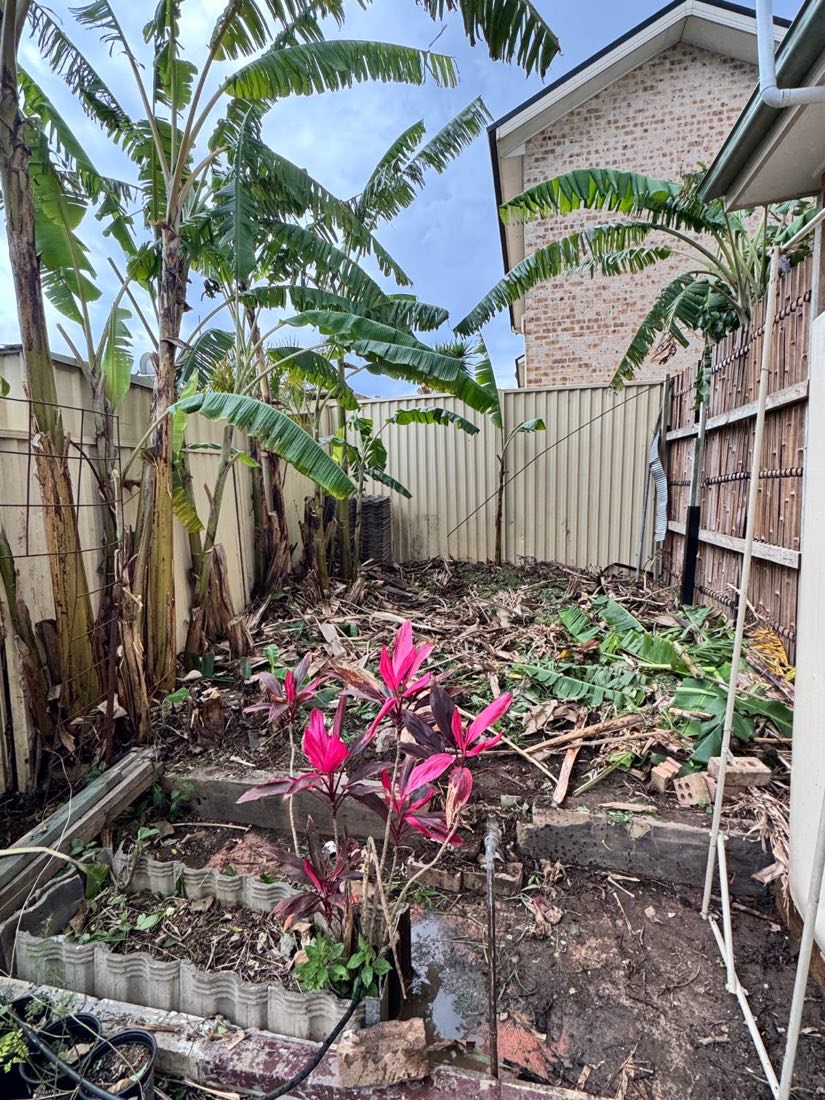
A small suburban backyard in western Sydney, where the limiting factor was never really space. The banana clump thinned and fed back as mulch, turmeric through the beds, and a corner set aside for a compact food forest.
Read the journal →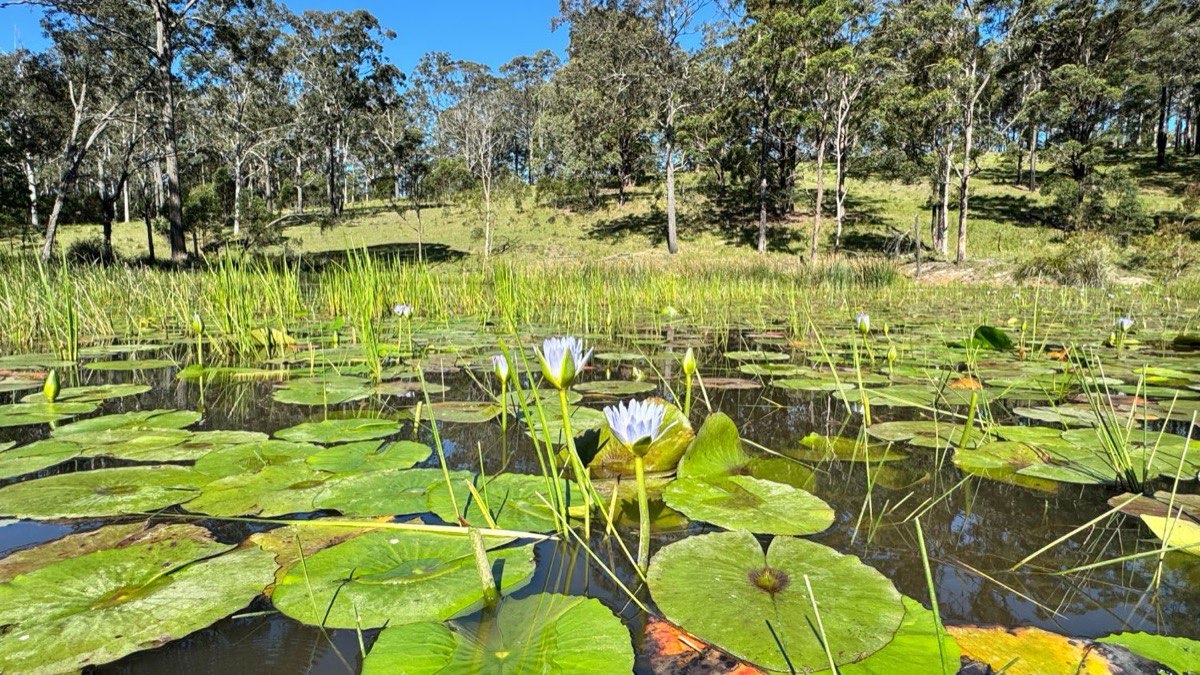
A Mid North Coast block on the boundary between humid subtropics and warm temperate. Two dams in contrasting light, one carrying flowering blue lotus, and a creek line worth reading slowly before anything is planted.
Read the journal →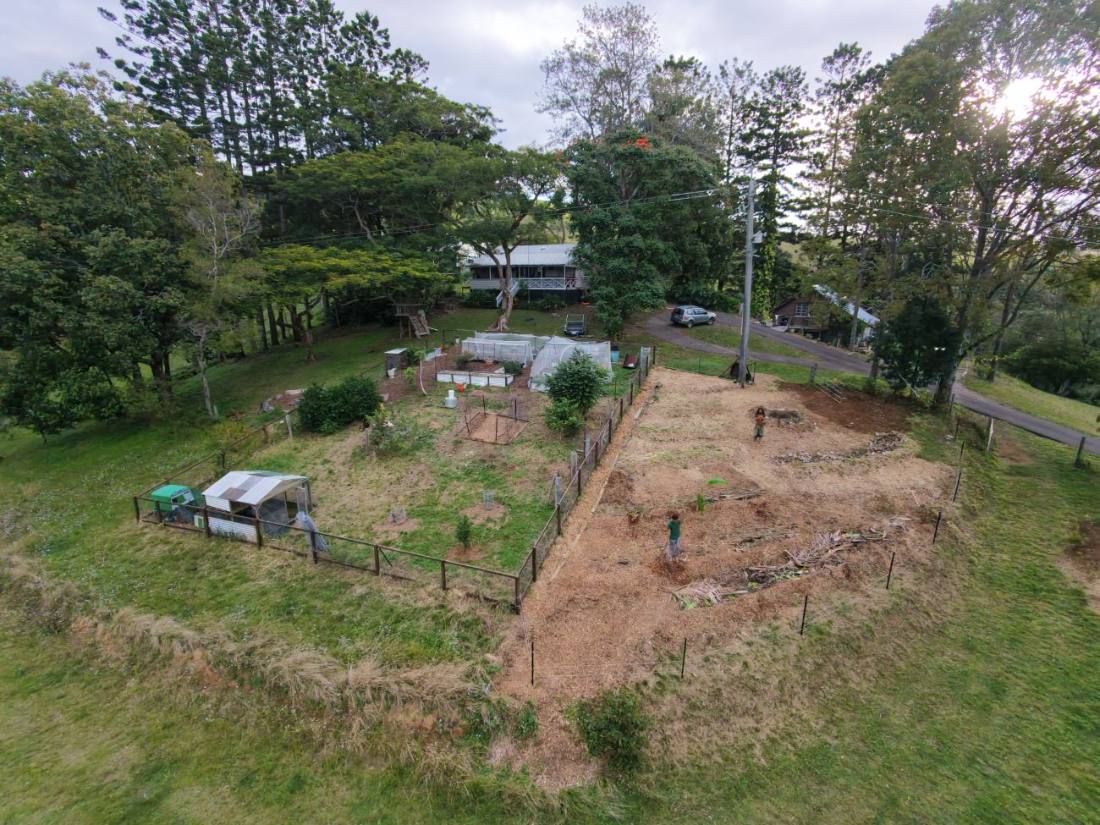
A sloping subtropical block brought up from bare pasture over four weeks: fencing run around the whole food forest, swales dug by hand and packed with biomass, then a mulch pile of many cubic metres spread across it.
Read the journal →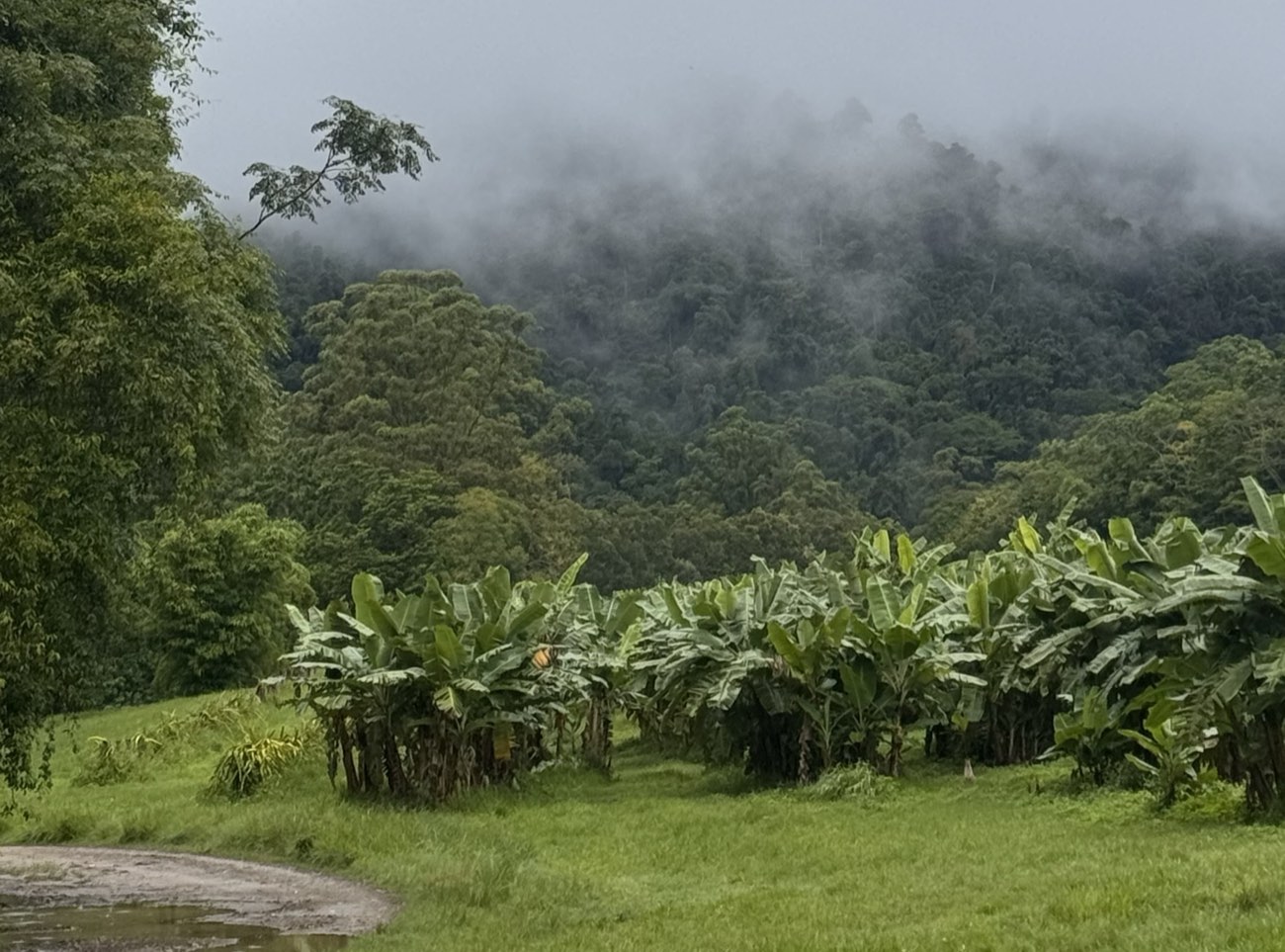
Not a client project but where my subtropical growing came from. Close to two years on a commercial organic banana farm in the ranges behind Mackay: harvest, markets, composting, vanilla, and a market garden we dug by hand.
Read the journal →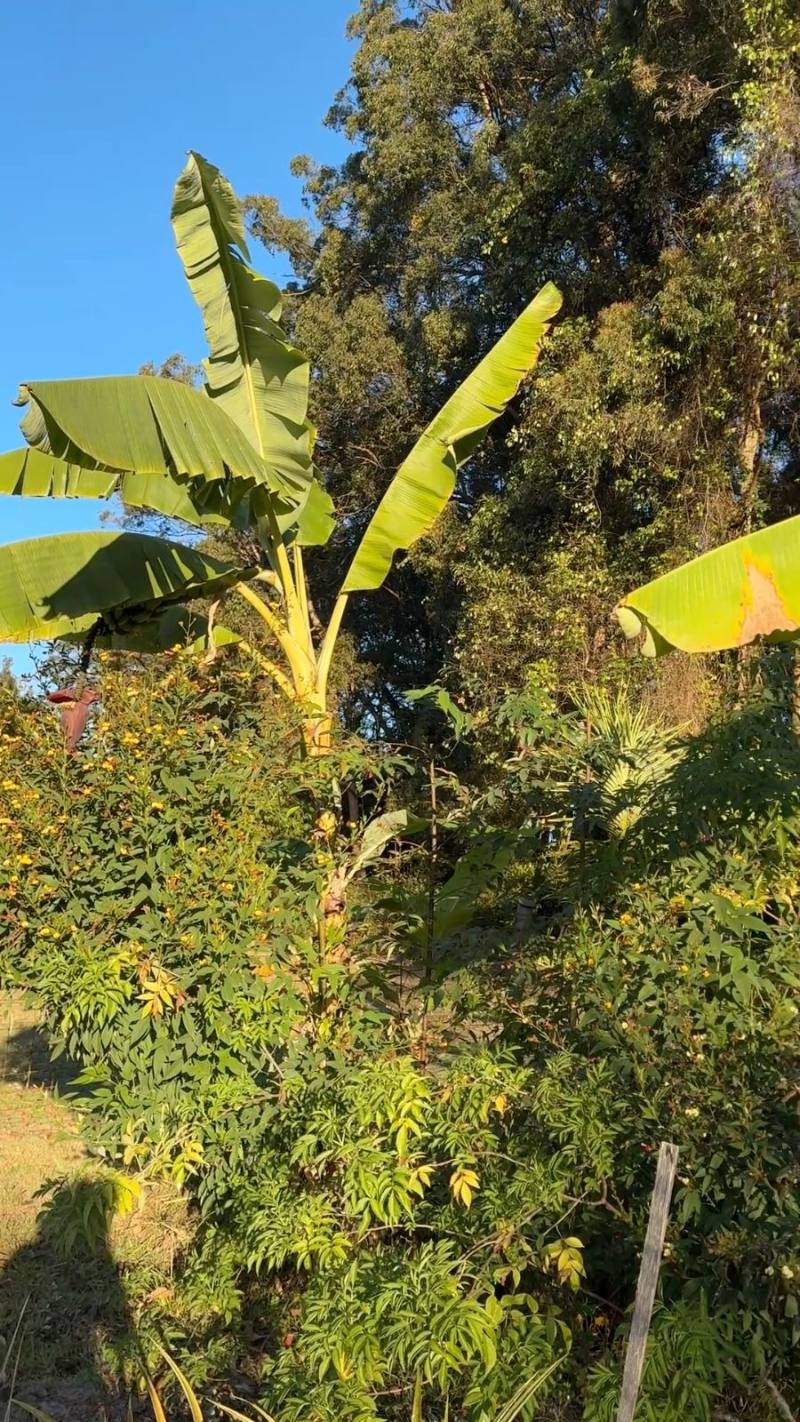
Three years of succession on sandy soil under competing gums. Biochar made on site to hold nutrients, bananas now holding the canopy, the understory closed over and enough biomass that the system feeds its own fertility.
Read the journal →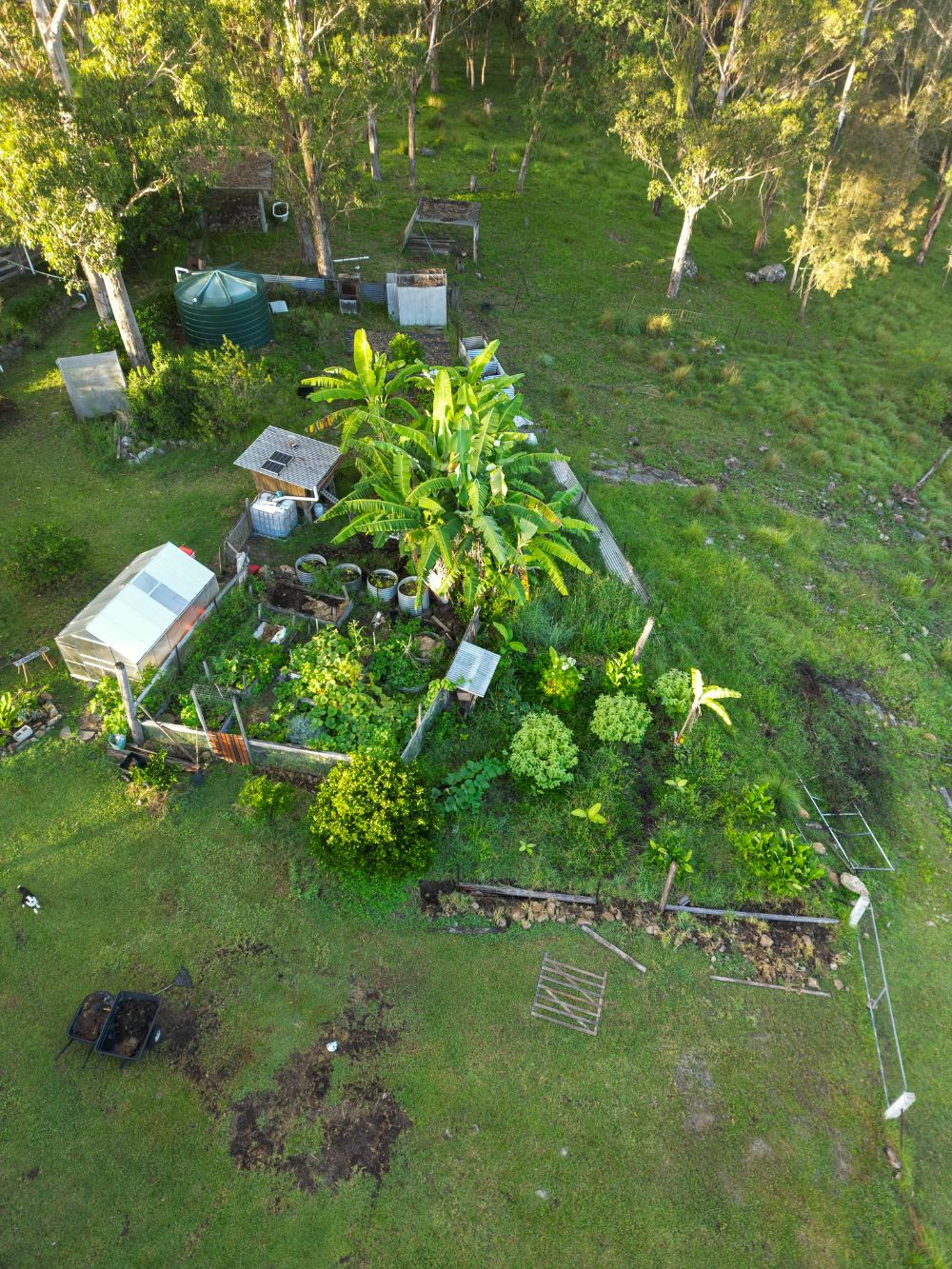
A fenced village garden on granite country inland from Lismore: raised beds, a greenhouse, tanked water and a banana circle holding the centre. I no longer service the property, and it still stands there, feeding itself.
Read the journal →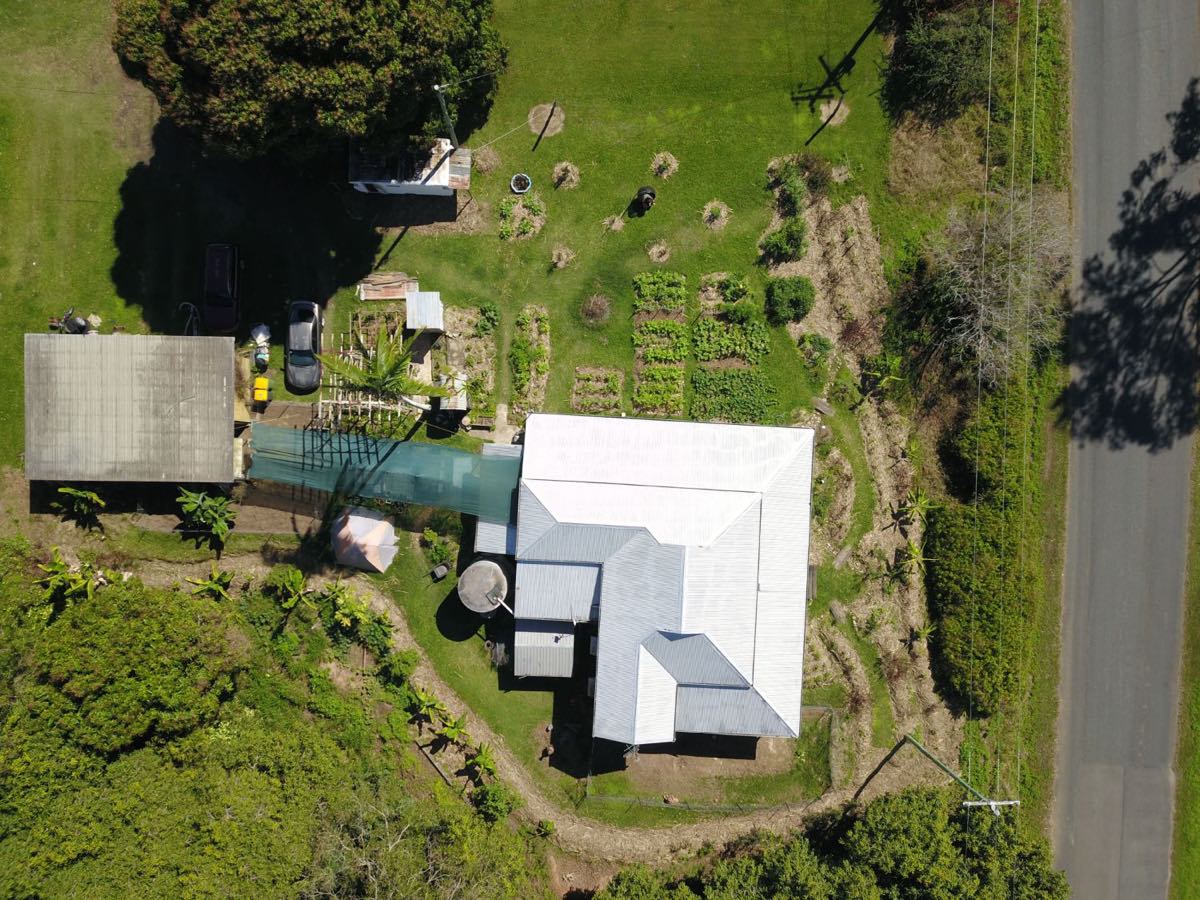
A house food forest in the cane country north of Mackay, my home base across two stays. Turmeric in the ground, most of 2023 spent planting and building soil, then the bridge into farm work. A rental, left behind in 2024.
Read the journal →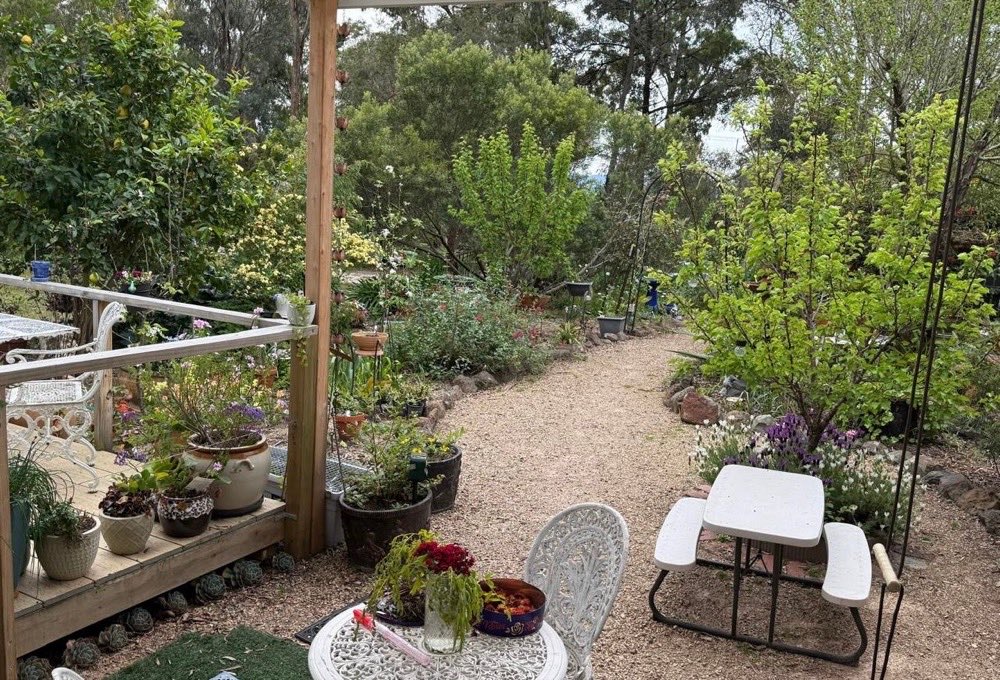
Where the whole thing started, in a cool-temperate family garden. Deciduous stone fruit set out for winter chill and summer light, underplanted with flowering beds that carry pollinators right through the season.
Read the journal →
A hands-on grower, permaculture practitioner and horticulturally trained garden builder with practical experience in organic growing, food forests, subtropical systems, propagation, swales, biomass systems and edible landscapes.
Permaculture Design Certificate Discover Permaculture · issued March 2023 Verify this credential ↗His approach begins with observation rather than a fixed template. Every garden is treated as a living system shaped by climate, soil, water, succession and the people who live there.
“My aim is to leave the land more alive, and leave the humans more capable of tending it.”
You are welcome to work alongside me. Labour runs at $50 per hour, so every hour you contribute reduces labour costs, and you finish the day knowing the garden.
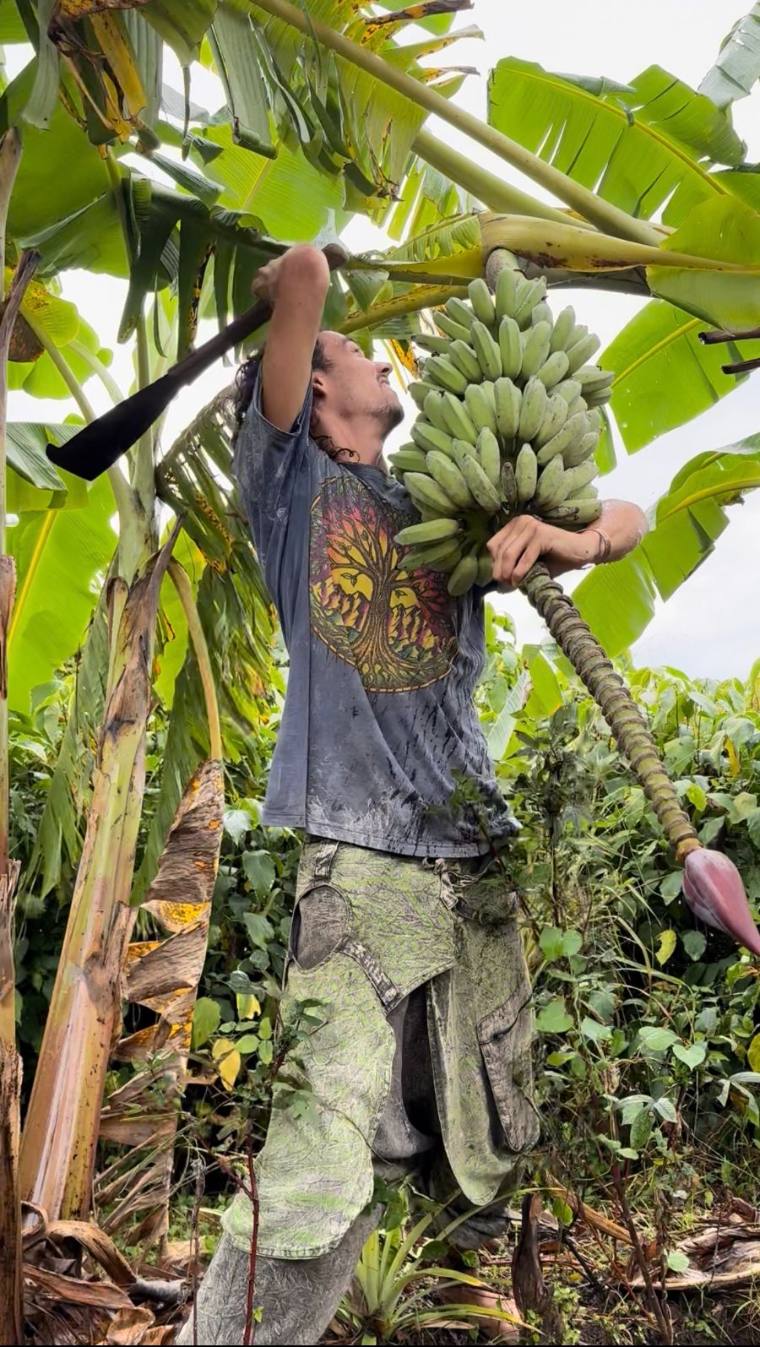
Between runs down the coast I come home to a thriving oasis surrounded by fields of sugarcane and rainforest ranges north of Mackay. We have transformed an old pub here into a living hub, a fruit and vegetable shop trading out of the old barn, a veggie garden growing right out the front, a food forest being established on the surrounding 14 acres, and even a mycology lab out the back, growing gourmet oyster mushrooms and lionsmane!
I live there with my father, working the land and tending my exotic fruit tree nursery whenever I am off the road. It is the proving ground: everything I plant in other people's gardens is something I am growing, eating and failing at here first. (bioregionally appropriate of course).


A food forest is never finished on planting day. Annual stewardship visits begin from $300, a minimum of six hours on the ground, with any additional work at $50 per hour, and are timed with my regional route where practical. We walk the system again, prune, chop and drop, observe what has changed and decide what wants to happen next.
Ask about stewardshipThe same principles that build a food forest build a life. Both need soil before spectacle. Both need patience through the seasons where nothing visible is happening. Both turn what fell away last year into what feeds the next one.
Under every healthy forest runs a mycelial network, an unseen web trading nutrients and signals between trees that never appear to be in conversation. Look at a neural network in the brain and you are looking at the same branching pattern, the same fusing, the same quiet traffic. As within, so without: the correspondence is not a metaphor laid over nature, it is the shape nature keeps arriving at.
And a garden wastes nothing. Prunings, spent leaves, the season that failed, all of it goes back down, breaks open and returns as fertility. That is the whole alchemy, inner and outer alike: composting what you would rather not carry until it becomes the gold the next planting feeds on.
GoldenMonkey.Life is where I work with people on their inner garden. Book a consultation there and we walk your own internal garden through the alchemical process, the same way we would walk a block of land.
Book a consultation at GoldenMonkey.LifeIt depends on the land, because every budget splits between materials and labour. Labour is $50 per hour, so the more a site needs in plants, soil and mulch, the fewer hours the same $1,000 buys. Where the client already has materials on hand, almost the whole budget becomes layout and planting. The site conversation identifies the strongest use of the investment.
Site discovery is $250. A $50 non-refundable deposit is taken by card at booking, it confirms the date is held for you on the route. The remaining $200 is paid on site on the day of the walk.
No. Projects start from $1,000 and the final quote states exactly what is included. Plants, bulk materials, travel, machinery and specialist labour vary between sites.
A minimum of six hours of labour on site, pruning, chop and drop, mulching, succession review and a walk through what has changed since the last visit. If the garden needs more than that, or you want extra work done while I am there, the additional time is charged at $50 per hour and agreed before it starts.
Yes, phased implementation is part of the model. A first planting can become the nucleus of a much larger food forest over time.
Yes. The service is built around an annual east-coast route and projects are grouped by region where practical. Significant travel cost is agreed before booking. I like to stay on the land where I will be working in my van or swag.
Yes, where practical. Plants can also be supplied directly by you from an agreed list, which often stretches the budget further.
Yes, and it is encouraged where it suits the project. Labour is $50 per hour, so every hour you work beside me is an hour the budget no longer has to cover, which could potentially mean more plants and mulch in the ground for the same money, and you finish the day knowing the garden.
The ecological principles travel; species and timing change with the place. Planting is always site-specific. I have had years of experience in both subtropical and temperate climates.
Some tasks overlap with soft landscaping. Although the main focus is productive, regenerative, edible systems rather than ornamental landscape construction.
Planting follows the weather. If conditions would harm the plants or the soil, or make work difficult, we reschedule within the regional window and I keep you informed through the process.
The more you share, the more useful my first reply will be. Photos and a postcode are the two most helpful things.
Your enquiry is ready to send. I read every one myself and reply with where your postcode sits on the route and what your budget could realistically create as a first phase.